
This post may contain affiliate links to kitchen tools and ingredients I use and love. If you buy through my links, I earn a small commission at no extra cost to you — it helps me keep creating free recipes for you.
Meal planning doesn’t have to feel rigid or overwhelming. When you break it down into small, repeatable steps, it becomes one of the easiest ways to save time, reduce decision fatigue, and avoid last‑minute takeout. This demo post shows how a simple meal‑planning routine can fit into a busy week without complicated systems or fancy tools.
Why Meal Planning Helps
A basic plan removes the daily “What should I cook?” stress. It also helps you use what you already have, cut down grocery costs, and avoid food waste. Even a loose plan is better than none.
1. Start With What You Already Have
Check your fridge, freezer, and pantry before choosing recipes. Build meals around ingredients that need to be used soon. This keeps your plan practical and budget‑friendly.

2. Choose 3 Core Meals for the Week
Instead of planning seven dinners, pick three main meals you can rotate or repurpose. For example:
- One‑pot pasta
- Stir‑fry with veggies
- Slow‑cooker chicken
Fill the remaining days with leftovers, simple sandwiches, or breakfast‑for‑dinner.
3. Keep a Running List of Easy Recipes
Save 5–10 go‑to recipes you can cook without thinking. When you’re tired, this list becomes your safety net. Add new favorites over time.
4. Prep Small, Not Big
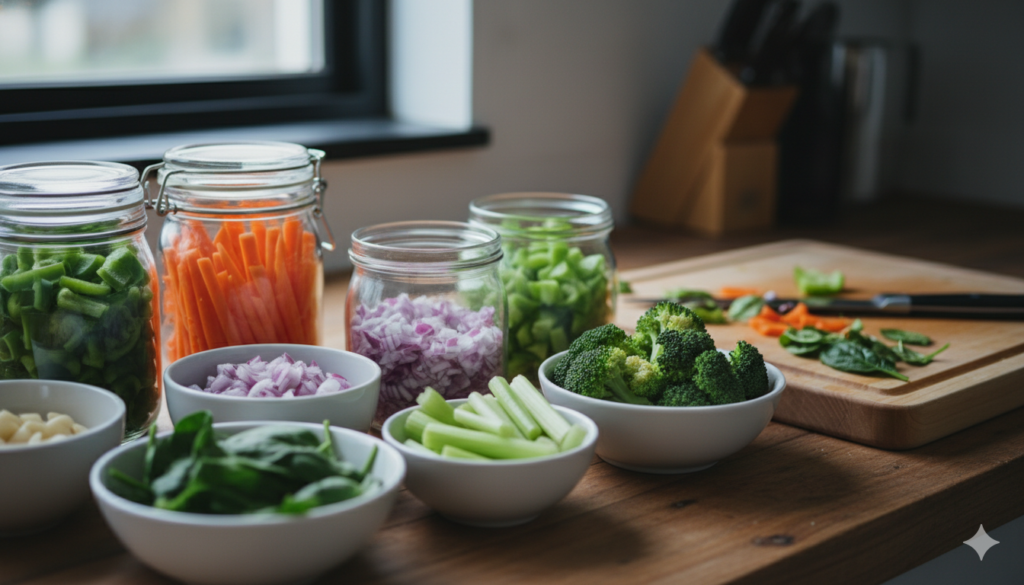
You don’t need a full Sunday meal‑prep session. Even prepping one thing—like chopping veggies or cooking rice—can make weekday cooking faster.
5. Write Your Plan Somewhere Visible
Use a sticky note, a whiteboard, or your phone. Seeing your plan helps you stay on track and reduces last‑minute decisions.
Leave a Reply